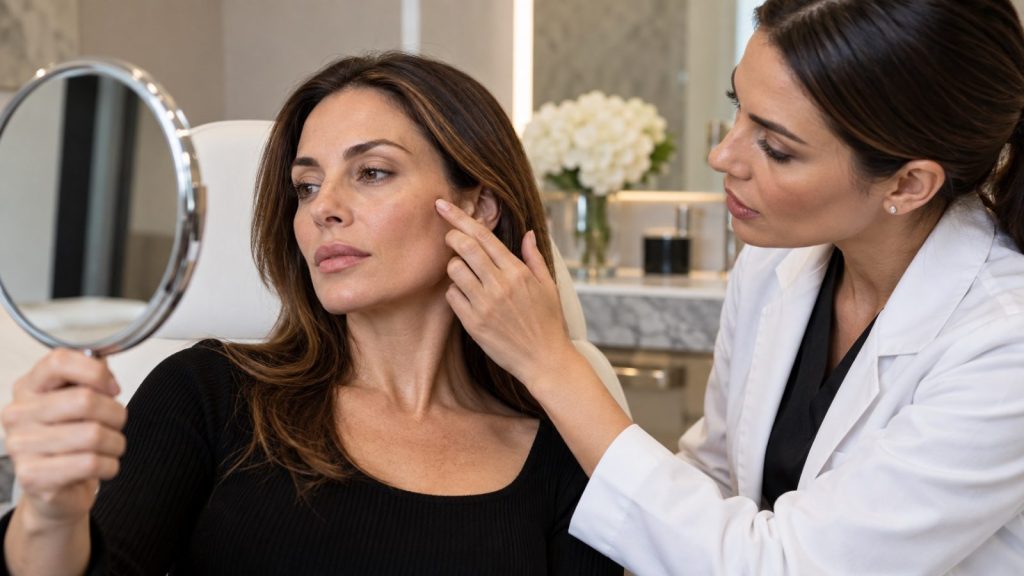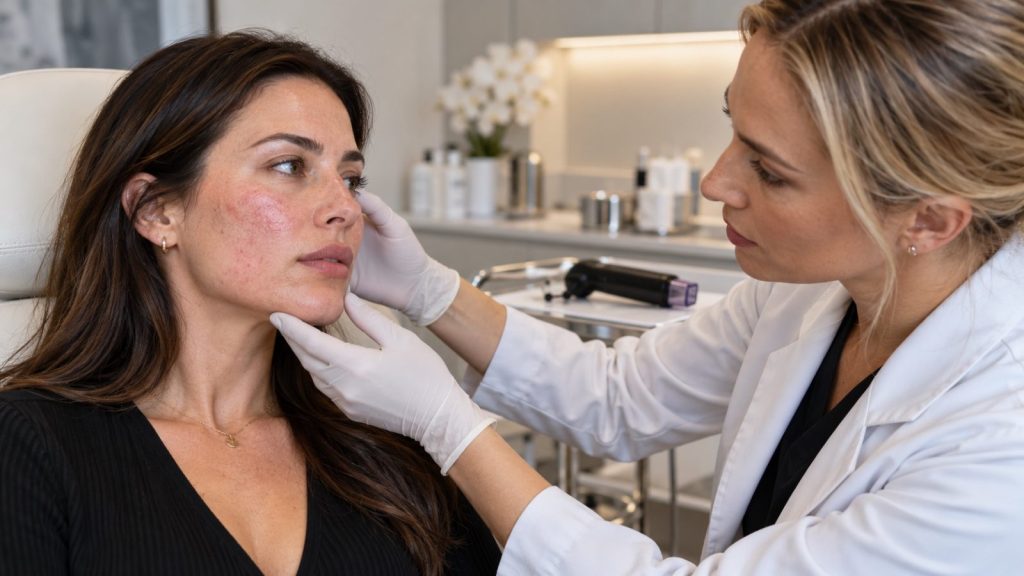
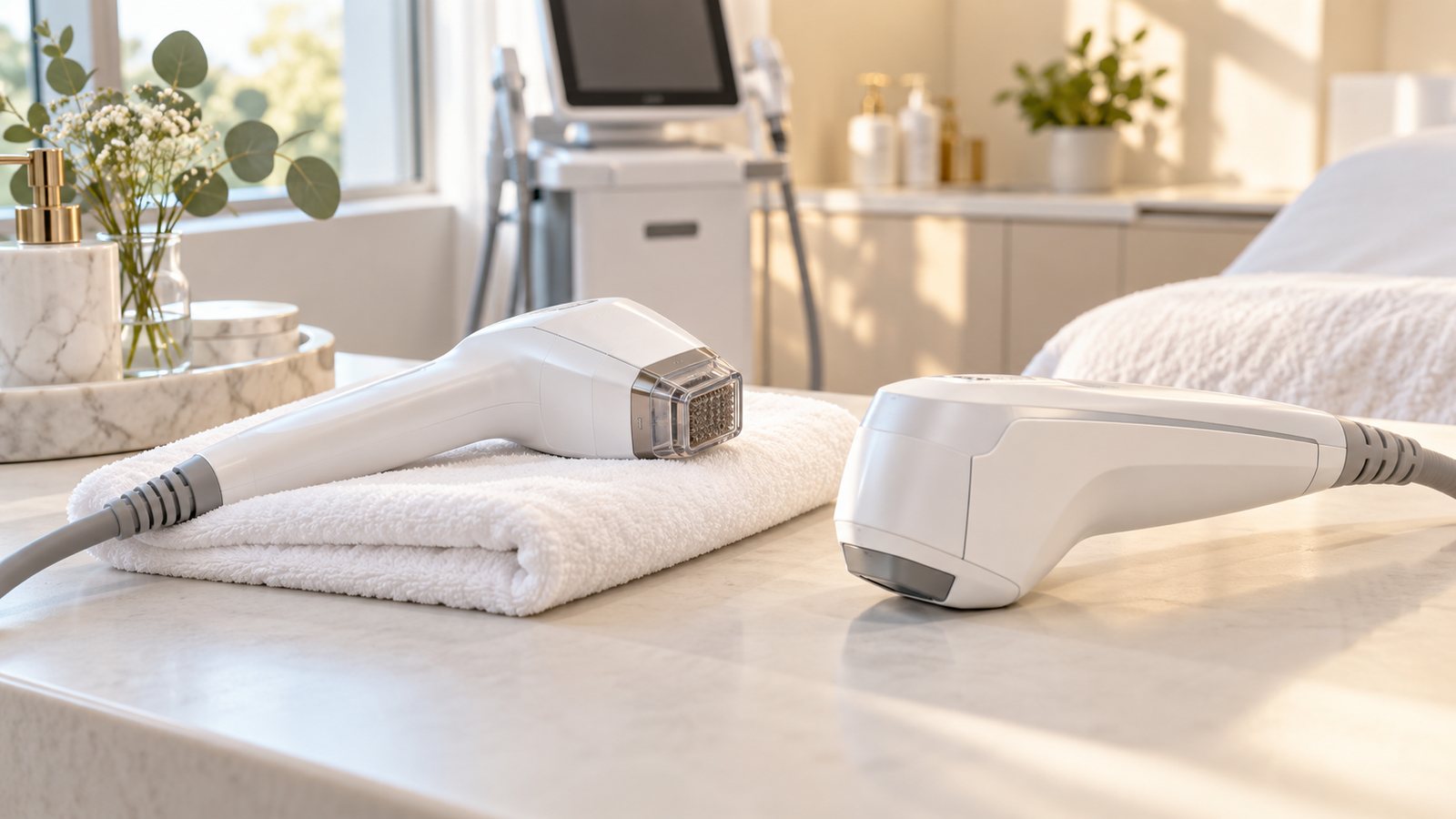
Morpheus8 and HIFU use different forms of energy. Morpheus8 combines microneedles with radiofrequency, while HIFU uses focused ultrasound delivered through the skin. Both may be considered for selected skin laxity concerns, but the choice depends on anatomy, skin quality, the treatment objective and the specific device. Neither should be presented as a replacement for a surgical facelift.
If you are comparing treatments online, the names can make the decision seem simpler than it is. “Tightening” can refer to several different changes, and the same description may be used for patients with very different needs. A useful comparison starts with what you want to improve and which tissue is responsible for the appearance.
Morpheus8 vs HIFU at a Glance
| Question | Morpheus8 | HIFU |
|---|---|---|
| Energy source | Radiofrequency delivered through microneedles | Focused ultrasound |
| Skin penetration | Needles pass into the skin | No needles in the usual external treatment |
| Typical discussion | Texture, selected scars and mild laxity | Selected facial or neck laxity |
| Recovery considerations | Redness, swelling and visible treatment marks can occur | Tenderness, swelling or altered sensation can occur |
| Result timing | Develops over weeks and months | Develops over weeks and months |
| Main limitation | Outcome depends on indication, technique and tissue response | Device differences and patient selection limit general predictions |
This table is a starting point for consultation. It does not establish that one treatment is universally stronger, safer or better value. The precise device, settings, operator and anatomy matter more than a broad technology label.
How Does Morpheus8 Work?
Morpheus8 is a branded radiofrequency microneedling system. Small needles enter the skin and deliver RF energy at selected depths. The resulting controlled tissue injury and heating are intended to encourage remodelling. The practitioner chooses an approach for the area being treated rather than applying identical settings to every face.
People may consider it for texture, selected acne scars or mild skin laxity. Those concerns overlap only partly. A plan focused on scarring may differ from one aimed at the lower face. Our Morpheus8 treatment page explains the assessment process and the importance of an individual treatment objective.
Deeper or stronger treatment is not automatically better. The desired tissue response needs to be balanced against injury to surrounding structures. A patient with a lean face or existing hollowing may have different priorities from someone with thicker tissues and another pattern of laxity.
How Does HIFU Work?
HIFU stands for high-intensity focused ultrasound. In aesthetic practice, focused ultrasound systems create small zones of heating at selected tissue depths through an external treatment head. The intended response includes tissue contraction and subsequent remodelling. HIFU is a technology category, rather than one single device or a standardised treatment.
Different systems can have different characteristics, treatment depths and evidence. Microfocused ultrasound with visualisation should not be assumed to be identical to every device advertised as HIFU. Ask for the exact device name and the evidence relevant to the area and concern you want treated.
Our overview of aesthetic treatments and technologies includes focused ultrasound within the wider treatment landscape. A comparison article does not mean every device or procedure discussed is offered at the clinic; availability and suitability should be confirmed directly.
Which Is Better for Skin Texture?
If the main issue is uneven texture or selected acne scarring, the consultation may include microneedling-based options because the treatment approach can address the skin itself. However, scar type, active acne, pigmentation history and previous procedures all affect what is appropriate. Not every scar will respond in the same way.
Focused ultrasound is more commonly discussed around laxity than surface resurfacing. That does not mean an RF procedure is automatically right for anyone who wants smoother skin. Some concerns need skincare, dermatological treatment, another device or no procedure at all. Identifying the problem accurately prevents choosing a technology for the wrong reason.
Which Is Better for Jowls and Laxity?
Jowls are not caused by one isolated layer. Bone structure, facial fat, skin quality, ligaments and tissue descent can all contribute. Heating a selected depth cannot reliably correct every aspect of that anatomy. Mild laxity may be discussed differently from substantial tissue descent or excess skin.
A patient may describe wanting “lifting” when the main issue is volume loss or a change in lower-face proportions. In that situation, further reduction in tissue volume could be undesirable. Ask the practitioner to explain which part of your concern the proposed treatment can realistically improve and which features are likely to remain.
For more advanced laxity, surgical assessment may offer a more relevant discussion. Declining surgery does not make a device capable of producing the same result. A conservative nonsurgical option can still be worthwhile for some patients, provided its limitations are understood before treatment.
What Does the Evidence Show?
A 2024 systematic review and meta-analysis of intense focused ultrasound examines outcomes and safety across published studies. Such research can help frame expectations, but the findings cannot be transferred without qualification to every ultrasound device, treatment protocol or individual patient.
Similarly, evidence for radiofrequency microneedling needs to be matched to the indication and device. Photographs from one clinic or a study involving a particular setting do not guarantee an equivalent outcome elsewhere. Ask whether an advertised result reflects typical change, a selected exceptional case or a combination of procedures.
There is no sound basis for a universal percentage claim that one of these technologies is better for every face. Direct comparisons can be limited by different populations, follow-up periods and outcome measures. An honest consultation should discuss uncertainty as well as potential improvement.
How Do the Appointments Compare?
Comfort and Pain Control
Both procedures can cause discomfort. RF microneedling involves skin penetration and heating; ultrasound may produce deeper brief sensations in treated areas. The experience varies with location, settings and individual sensitivity. Discuss pain control and what to do if a sensation feels unexpected rather than assuming that severe pain proves treatment is effective.
Treatment Planning
Session length and the number of visits depend on the area and intended result. One clinic’s package is not necessarily equivalent to another’s. Ask how many treatments are proposed initially, when progress will be assessed and what would lead the clinician to stop or change the plan.
Before You Commit to a Course
Request a clear explanation of the total likely cost, follow-up and aftercare. Understand whether further sessions are optional and how a poor response would be handled. A discounted package should not be the reason to continue treatment when your skin or clinical circumstances suggest reassessment is needed.
Recovery and Downtime
After RF microneedling, redness, swelling, sensitivity, dryness, pinpoint marks or small crusts can occur. The intensity and duration vary. Visible recovery may affect work, makeup and social plans, even if the appointment is described as nonsurgical. See our Morpheus8 recovery guide for practical planning.
External ultrasound treatment does not usually create needle punctures, but that should not be confused with an absence of recovery or risk. Tenderness, swelling, discomfort or altered sensation may occur. Your provider should explain the pattern expected with the particular device and what would be considered unusual.
For either treatment, follow written instructions about skincare, sun protection, exercise and other procedures. Avoid planning an important event on the assumption that everyone looks normal by a fixed day. Build in a realistic buffer and contact the provider if recovery differs from the explanation given.
What Are the Risks?
In October 2025, the FDA issued an RF microneedling safety communication following reports of serious complications with certain uses, including burns, scarring, fat loss, disfigurement and nerve damage. The notice is relevant to informed discussions of the technology; it does not mean that every patient will experience these outcomes.
Focused ultrasound also requires careful selection and technique. Burns, unwanted tissue effects and nerve-related symptoms are concerns to discuss alongside more transient discomfort and swelling. A device being described as non-invasive does not make inappropriate energy placement harmless. Ask about the practitioner’s training and the specific risks for your anatomy.
For a wider explanation of unwanted RF outcomes, see our Morpheus8 complications and facial fat loss page. A lean face, previous procedures or existing sensitivity may change the balance of benefit and risk.
Who Needs Extra Caution?
Tell the practitioner about medical conditions, implanted devices, medicines, pregnancy or breastfeeding, skin infections, active inflammatory skin disease, scarring history and previous aesthetic procedures. Suitability and contraindications depend on the specific system and treatment. Do not assume approval for one energy-based procedure automatically means another is appropriate.
Skin tone and a history of post-inflammatory pigmentation should also be discussed. A claim that a procedure suits all skin types does not replace an individual assessment. The clinician should explain how your skin history affects planning and what measures may reduce avoidable risk.
Can Morpheus8 and HIFU Be Combined?
Sometimes a clinician may consider more than one approach for different concerns. Combining procedures is not automatically more effective or safer, and treating the same tissues repeatedly can complicate recovery and risk assessment. There should be a clear purpose for each intervention and an appropriate plan for timing and review.
Tell every provider about recent device treatments, injectables and surgery. If different clinics are involved, share the records rather than relying on treatment names alone. More procedures should not be recommended simply because several options are available.
How to Make a Useful Decision
- Describe the specific change you want, such as texture improvement or a modest change in laxity.
- Ask which tissues are contributing to the concern.
- Confirm the exact device and the practitioner’s experience with it.
- Discuss likely improvement, uncertainty, recovery and serious risks.
- Compare the complete course and follow-up, rather than a headline session price.
- Consider alternatives, including observation or surgical assessment where appropriate.
A practitioner should be willing to explain why neither option is suitable. That can be a useful outcome of consultation, particularly when the desired change is beyond what a nonsurgical device is likely to achieve.
Frequently Asked Questions
Which Treatment Gives Faster Results?
Neither should be judged only by the immediate appearance. Swelling or temporary tissue changes can influence early photographs, while remodelling takes time. Ask when your own result should be assessed and use consistent photographs. A quicker visible change is not automatically a better final outcome.
Will Either Treatment Permanently Stop Ageing?
No. Skin and facial tissues continue to change with time, sun exposure, health and weight changes. Maintenance is an individual discussion, not an automatic recurring schedule. Reassessment should establish whether further treatment is likely to help rather than repeating energy delivery simply because a set interval has passed.
When Should I Seek Help After Treatment?
Contact the provider promptly for worsening pain, blistering, open skin, spreading redness, unusual colour changes or unexpected sensory or movement changes. Seek emergency medical care for severe or rapidly progressing symptoms, including breathing difficulty or sudden neurological or visual changes. Do not wait for a routine review if you feel seriously unwell.
Is a Higher Price Evidence of a Better Device?
Price can reflect equipment, staffing, treatment area and follow-up, but it does not prove that a procedure is right for you. Ask what is included and why the proposed approach matches your concern. A more expensive intervention can still be inappropriate when the main issue lies in another tissue or needs a different form of care.
Should I Choose From Social Media Results?
Use photographs as a conversation starter. Check whether lighting, expression and camera position are comparable, and ask if other treatments contributed. Your own baseline anatomy is more useful for planning than another person’s best photograph.
Discuss Your Options at DRV Clinic
A consultation at DRV Clinic in Marylebone can help clarify whether Morpheus8 or another approach fits your skin and goals. Bring details of previous procedures and explain the degree of change you expect. The aim is a proportionate plan based on your anatomy, evidence and tolerance for recovery and risk.
This article is general educational information and cannot establish suitability remotely. Confirm available treatments directly with the clinic, and seek individual medical advice before choosing an energy-based procedure.
Leave a Reply Cancel reply
Your email address will not be published.Required fields are marked *
Comment *
Name *
Email *
Website
Save my name, email, and website in this browser for the next time I comment.